



Become a Certified EMT in Wisconsin: Clear Steps to Certification
Starting an EMT career in Wisconsin requires approved training, practical skills, national certification, and focused exam preparation. If you're learning how to become an EMT in Wisconsin, this guide explains the key steps from training to state licensure. At How To NREMT, we help Wisconsin EMT candidates prepare with realistic practice tests, AI-powered support, structured study tools, and personalized guidance.
Clear Steps to Become an EMT in Wisconsin
Becoming an EMT in Wisconsin starts with approved education and practical training. You then complete the national certification process and apply for state licensure.

Wisconsin EMT Requirements
Before starting your EMT journey, make sure you understand the main requirements:
- Be at least 17 years old to apply for an EMT-Basic training permit
- Be at least 18 years old to receive Wisconsin EMS licensure
- Enroll in a Wisconsin-approved EMS training program
- Complete the required EMT education and training
- Hold current Health Care Provider CPR certification
- Complete the required NREMT certification process
- Meet Wisconsin background and licensing requirements
Wisconsin allows eligible students to apply for an EMT-Basic training permit after completing the first 46 hours of an initial EMT-Basic course. The permit allows students to participate in field and clinical training while enrolled in the approved program.
Step 01
Confirm Your Eligibility and CPR Requirements
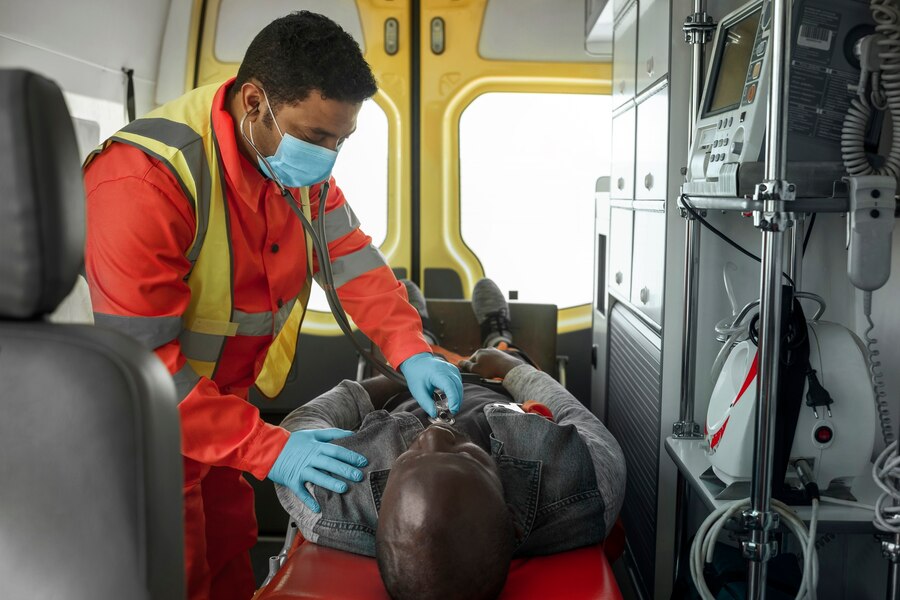
Wisconsin EMT training begins with enrolling in an approved EMS education program. Students applying for a training center permit must be at least 17 years old, enrolled in an approved course, and have completed a healthcare-professional-level CPR course within the required period.
Wisconsin EMT licensure requires applicants to be 18 or older. You must also maintain current Health Care Provider CPR certification as part of the state licensing requirements.
Step 02

Enroll in a Wisconsin-Approved EMT Course
Choose a Wisconsin EMT course through a Wisconsin EMS Training Center approved by the Wisconsin DHS. Programs provide the education and practical training needed to prepare for EMT certification.
Technical and community colleges offering approved programs include Chippewa Valley, Fox Valley, Lakeshore College, Madison College, NWTC, WCTC, Western Technical College, Mid-State, and Gateway, along with EMS training centers across the state.
Students completing the required initial training can use Wisconsin's training permit process to participate in clinical and field training.
Step 03
Build Your Practical EMT Skills
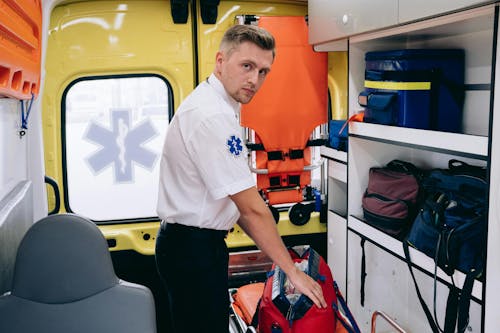
Your training prepares you to provide safe patient care in real emergencies. You will develop skills such as patient assessment, trauma care, airway management, CPR and AED use, hemorrhage control, splinting, and other essential EMT procedures.
Wisconsin uses state-approved BLS skills competency requirements alongside the NREMT certification examination. The practical skills process is established by the state, so students should complete the requirements set by their approved training program and Wisconsin EMS authorities.
Step 04
Understand the Updated NREMT Exam Domains
The updated NREMT EMT examination launched on April 7, 2025. It focuses on five content domains:
- Scene Size-Up & Safety — 15–19%
- Primary Assessment — 39–43%
- Secondary Assessment — 5–9%
- Patient Treatment & Transport — 20–24%
- Operations — 10–14%
Pediatric patient-care content is integrated throughout the exam. The updated examination also includes new item types designed to assess the knowledge and skills needed for entry-level EMT practice.
Step 05

Prepare for and Pass the NREMT Exam
After completing your required education and training, you must complete the NREMT certification process. The current EMT examination is computer adaptive, includes 70–120 items, and has a two-hour time limit. It is administered through Pearson VUE testing centers or OnVUE remote proctoring.
How To NREMT provides realistic NREMT practice exams, interactive video lessons, scenario-based questions, an AI tutor, and personalized study support. These NREMT exam prep tools can help you understand the current format and focus on areas that need more practice.
Step 06
Apply for Your Wisconsin EMT License
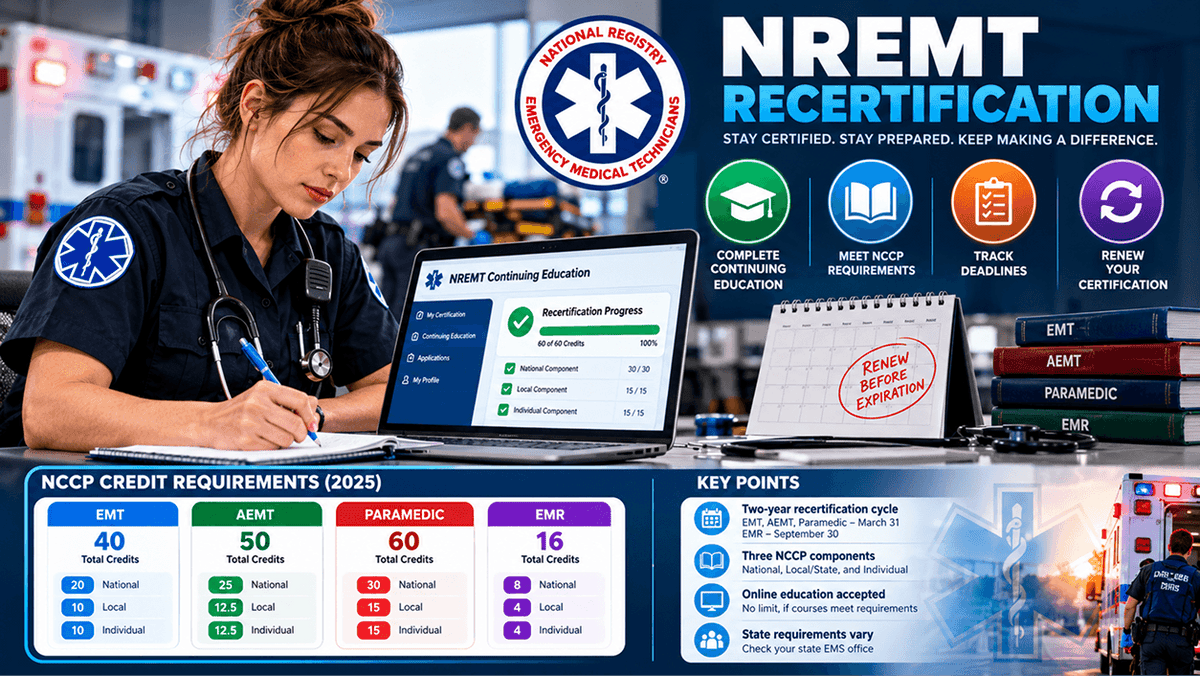
After completing your approved education and national certification requirements, apply through the Wisconsin EMS E-Licensing Portal.
Wisconsin requires an approved EMS education course before initial licensure. Initial applicants must obtain their Wisconsin license within 24 months of completing the course. For initial licensure, applicants must have current NREMT certification at the requested level and current Health Care Provider CPR certification.
Once your application is approved, you can receive your Wisconsin EMT license and practice according to Wisconsin EMS requirements.
Step 07
Keep Your Wisconsin EMT License Current
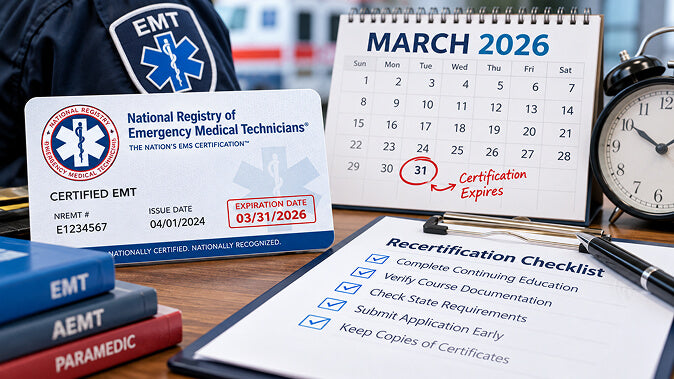
Wisconsin EMT license renewal requires you to meet the state's continuing education and CPR requirements. For the 2026–2029 renewal cycle, EMTs can qualify through current NREMT certification, a 40-hour EMT refresher course, or 40 hours of qualifying continuing education, along with current healthcare-professional-level CPR.
Keeping your NREMT certification, CPR, education, and other state requirements current helps you maintain your eligibility to practice.
National vs. Wisconsin EMT Requirements
| Requirement | National (NREMT) | Wisconsin |
|---|---|---|
| Minimum Age | State requirements may vary | 17+ for training permit; 18+ for licensure |
| Education | Approved EMT education program | Wisconsin-approved EMS Training Center |
| CPR Certification | Required as part of the certification process | Current Health Care Provider CPR required |
| Training Permit | Not a national requirement | Required for applicable student field and clinical training |
| Skills Evaluation | State-approved BLS skills process | Wisconsin-approved practical skills requirements |
| Certification Exam | NREMT EMT Certification Examination | Required for initial Wisconsin licensure |
| State Application | National certification process | Wisconsin EMS E-Licensing Portal |
| Renewal | NREMT recertification requirements | Wisconsin continuing education, CPR, and licensing requirements |
Wisconsin combines national certification with state-specific education, skills, licensing, and renewal requirements.

How To NREMT: Built to Help You Pass
Preparing for the NREMT is easier with a clear study plan. Offers Exam Secrets videos, 1,900+ flashcards, realistic practice exams, clinical scenarios, and answer explanations through its full-access membership. You can also get support from an NREMT prep tutor, 24/7 help from "Mr. How To," and live guidance through an NREMT prep class.
Need extra support? The 7- or 14-day intensive virtual boot camps provide live Zoom instruction, focused review, test strategies, and interactive practice. If you prefer one-on-one guidance, our personal tutoring from instructors has helped hundreds of students, especially those who've failed before — every tutoring graduate has passed the NREMT on their next try. You can also join our free monthly training session for extra exam preparation support.
FAQs
How old do you have to be to start EMT training in Wisconsin?
You must be at least 17 years old to apply for the Wisconsin EMT-Basic training permit. Wisconsin EMT licensure requires you to be 18 or older.
Do I need CPR certification for Wisconsin EMT licensure?
Yes. Wisconsin requires current Health Care Provider CPR certification for EMS licensure.
Is the NREMT exam required for Wisconsin EMT licensure?
Yes. Wisconsin requires current NREMT certification at the requested license level for initial licensure.
How long do I have to apply for Wisconsin EMT licensure after completing my course?
Initial Wisconsin certification or licensure must be obtained within 24 months of completing the approved EMS course.
What is required for Wisconsin EMT license renewal?
For the current renewal cycle, EMTs can meet the education requirement through current NREMT certification, a 40-hour EMT refresher course, or 40 hours of qualifying continuing education. Current healthcare-professional-level CPR is also required.
- Choosing a selection results in a full page refresh.