



How to Become an EMT in Utah: Your Complete Step-by-Step Guide
Ready to start a career in emergency medical services? If you're wondering how to become an EMT in Utah, you'll need to complete an approved education program, meet the state's licensing requirements, pass the required exams, complete a background check, and apply for your Utah license. From your first training class to exam day and state licensure, this guide explains each step in a simple way so you know what to expect.
What You Need to Know About Utah EMT Requirements
Before you begin, make sure you meet the basic requirements for EMT licensure in Utah. You should:
- Be at least 18 years old
- Have a high school diploma or GED
- Complete an approved EMT training program
- Have a valid government-issued photo ID
- Complete the required background check and fingerprinting
- Hold the required BLS Provider CPR certification
- Pass the required National Registry examinations
Note: Meeting these requirements is the first step toward becoming a licensed EMT in Utah. Make sure you have everything ready before starting your application process.
Follow These 7 Steps to Become an EMT in Utah
Becoming an EMT in Utah starts with meeting the state’s requirements, completing approved training, passing the required exams, and applying for your license. Follow these seven steps to understand the process and move closer to starting your EMT career.
Step 01

Meet the Basic Eligibility Requirements
You must be 18 or older to apply for Utah EMS professional licensure. A high school diploma or GED is generally part of the education pathway, and you should have a valid government-issued photo ID.
You also need to be able to meet the physical, professional, and safety demands of EMT work. If you have questions about a criminal history before beginning training, Utah BEMS recommends contacting the Bureau to determine whether it could affect your eligibility.
Step 02

Enroll in an Approved Education Program
Your next step is to complete Utah EMT training through a state-approved EMS education program. Your course should prepare you for classroom learning, hands-on skills, patient assessment, emergency care, and other entry-level EMT responsibilities.
Utah BEMS provides a system for finding approved EMS education courses. Programs may be offered through colleges, technical schools, fire departments, and other approved training providers. A Utah EMT course should also prepare you for the required National Registry examinations and the state licensing process.
Step 03
Get Your BLS Provider CPR Certification
A current BLS Provider CPR certification must be verified during the Utah licensing process. Your education provider may include CPR training as part of the program or tell you where to complete an approved course. Keep your CPR certification active because it is also part of the ongoing licensing requirements.
Step 04
Complete the Required Skills Examination
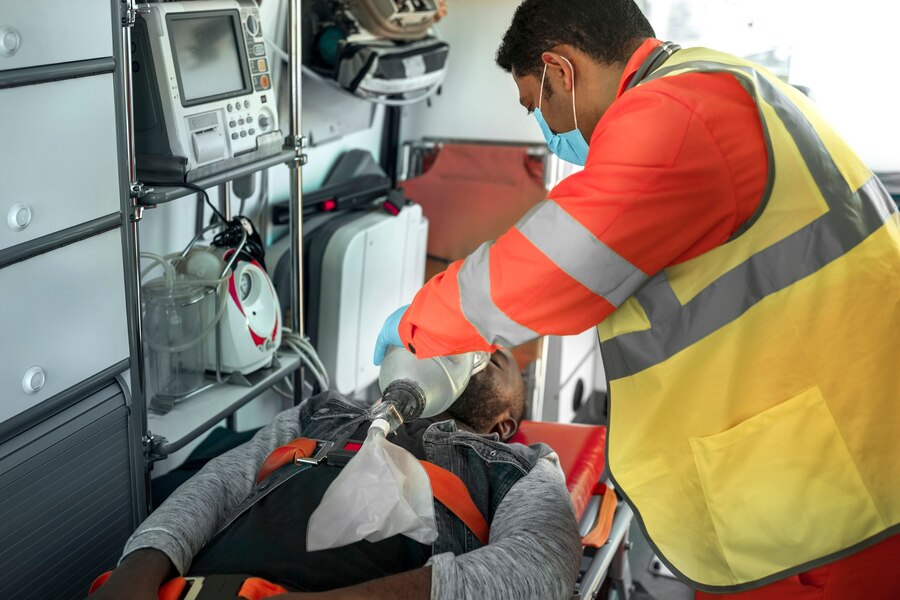
Hands-on skills are an important part of EMT education. You will need to demonstrate the skills required by your approved education and testing process before completing licensure. Training may include patient assessment, airway management, CPR/AED use, bleeding control, trauma care, and other emergency procedures. Utah allows up to two attempts to pass the practical skills exam.
The National Registry explains that BLS skills competency requirements for EMTs continue in the format established and approved by each state. Utah BEMS currently lists both cognitive and psychomotor examinations as part of the initial licensure process.
Step 05

Take the Updated NREMT Cognitive Exam
After completing your education and required skills process, you'll need to pass the NREMT cognitive exam.
The updated EMT examination launched on April 7, 2025. It is computer-adaptive and includes 70–120 items, including 10 unscored pilot items, with a two-hour time limit. You're allowed three attempts to pass before remediation is required.
The updated exam focuses on five major areas:
- Scene Size-Up and Safety (15–19%) – Recognizing hazards, using PPE, and preparing for safe patient contact.
- Primary Assessment (39–43%) – Evaluating airway, breathing, circulation, consciousness, and vital signs.
- Secondary Assessment (5–9%) – Gathering patient history and completing a focused physical assessment.
- Patient Treatment and Transport (20–24%) – Providing treatment, stabilizing patients, and making transport decisions.
- Operations (10–14%) – Managing communication, documentation, safety, and EMS operations.
The updated exam also uses Technology-Enhanced Items (TEIs), giving candidates different ways to demonstrate their knowledge.
For official Utah EMT licensing and examination information, visit the Utah Bureau of Emergency Medical Services and Preparedness (BEMSP).
Step 06
Submit Your Utah License Application
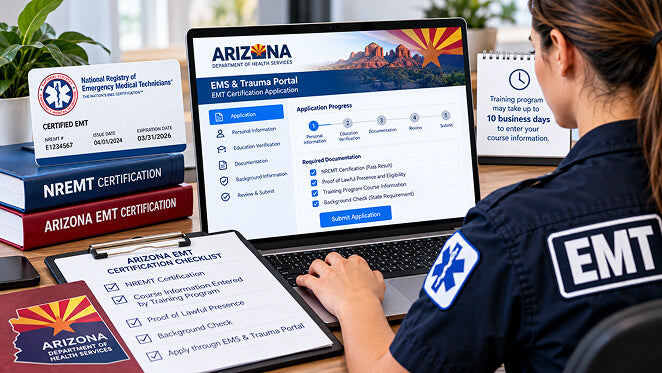
Once you've completed your course and required examinations, you can apply through Utah's EMS License Management System.
Your initial application requires items such as:
- Passport-style photo
- Government identification
- BLS Provider CPR verification
- Required licensing fees
- DACS fingerprint submission
- Criminal background check
- Successful completion of the required National Registry examinations
Utah BEMS directs initial applicants to submit their application and required documents online through the state licensing system.
After your requirements are reviewed and approved, you can receive your Utah EMT license and begin your EMS career.
Step 07
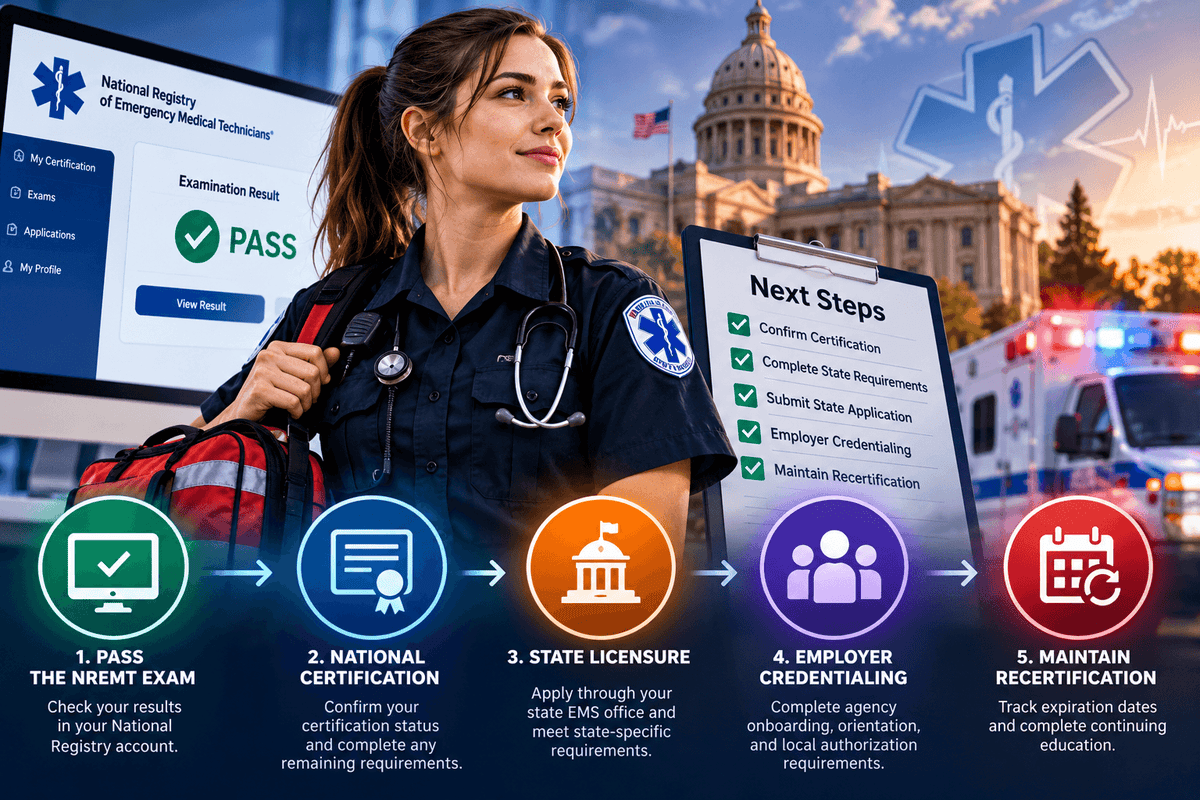
Complete Your Background Check and Stay Current
Utah requires an FBI background screening for EMS professional license applicants. After you submit your application and pay the required fees, BEMS provides the LiveScan/DACS information needed for fingerprinting.
Fingerprinting is generally a one-time requirement for continuous licensure, although a new submission may be required if your license lapses. Once licensed, keep your CPR, National Registry certification, continuing education, and Utah licensing requirements current.
Utah vs. National EMT Requirements
| Requirement | National Registry | Utah |
|---|---|---|
| Minimum Age | Generally 18+ (varies by state) | Must be 18 years old at the time of licensure |
| Education | High school diploma/GED typically expected | High school diploma/GED usually required for course entry |
| Training Program | Complete a state-approved EMT course (minimum 120 hours) | Complete a Utah BEMS-approved EMS education program (minimum 120 hours) with practical skills testing |
| CPR Certification | BLS CPR requirements apply | BLS Provider CPR verification required |
| Cognitive Exam | NREMT EMT examination, updated with TEIs and new content domains | Same NREMT cognitive exam required |
| Skills Exam | State-approved skills process | Utah-approved psychomotor process |
| Background Check | May vary by state | FBI background screening and fingerprinting required |
| Application & Licensing | National certification process | Utah EMS online licensing system |
National Registry certification and Utah state licensure are separate parts of the process. Completing the National Registry requirements does not replace the Utah application.
EMT National Training with Real Support
You don’t need to navigate the EMT certification process alone. How To NREMT is not your regular test prep site; it’s a full EMT national training support system with an NREMT prep tutor available at every step. From your first lesson to your exam day, we offer real, practical help.
Our system is trusted by thousands of future EMTs across the country. Many students say our tools didn’t just help them pass—they helped them understand what it means to think like an EMT.
So, if you’re serious about a career in emergency medicine in Utah, let’s make it happen.

Bonus Support for Utah EMT Candidates
- 7 or 14-Day EMT Boot Camp (Live on Zoom): Need to cram before test day? Our virtual boot camp is an intensive, focused prep experience. Join as much or as little as you need, with sessions held four times a year.
- Private Tutoring: Get personalized 1-on-1 help from experienced tutors. All students who completed our tutoring program have passed the NREMT on their first attempt.
Take the Live NREMT Prep Classes in Utah Now
Want to experience our program before you commit? Join one of our free monthly training sessions to get a feel for our teaching style and content. You’ll walk away with real tips and test insights—even if you don’t sign up.
- Choosing a selection results in a full page refresh.