



How to Become an EMT in Kentucky: Your Guide to NREMT Certification
Becoming an EMT in Kentucky starts with the right training, certification, and preparation for the NREMT exam. Whether you are taking the exam for the first time or preparing after an unsuccessful attempt, understanding the process can help you move forward with confidence. How To NREMT provides structured NREMT exam prep in Kentucky, practice tools, and tutoring support to help you prepare for the cognitive exam.
Kentucky EMT Requirements
Before starting EMT training in Kentucky, make sure you understand the basic certification requirements. Kentucky EMT candidates generally need to:
- Be at least 18 years old
- Complete a KBEMS-approved EMT course
- Hold current CPR certification
- Pass the NREMT cognitive exam
- Complete the required psychomotor skills exam
- Submit the required application and documentation through Kentucky's EMS system
Meeting these requirements gives you a clear starting point for your path to Kentucky EMT certification.
Steps to Become an EMT in Kentucky
Follow these steps to move from EMT training to state certification and prepare for your NREMT exam.
Step 01
Choose a State-Approved EMT Program
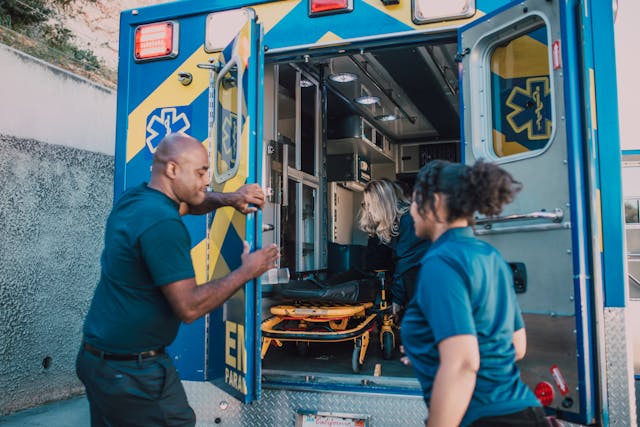
Start by enrolling in a KBEMS-approved EMT program in Kentucky. Training is available through local EMS agencies, technical schools, and community colleges. Your EMT course in Kentucky will combine classroom education with hands-on skills training to help you build the knowledge needed for patient care and the NREMT exam.
Step 02

Complete Your EMT Training
Complete the required education and practical training through your approved program. Your training should prepare you for patient assessment, emergency care, communication, and other essential EMT skills.
Once your course is complete, your program can verify your eligibility to move forward with the NREMT testing process.
Step 03
Prepare for the NREMT Cognitive Exam
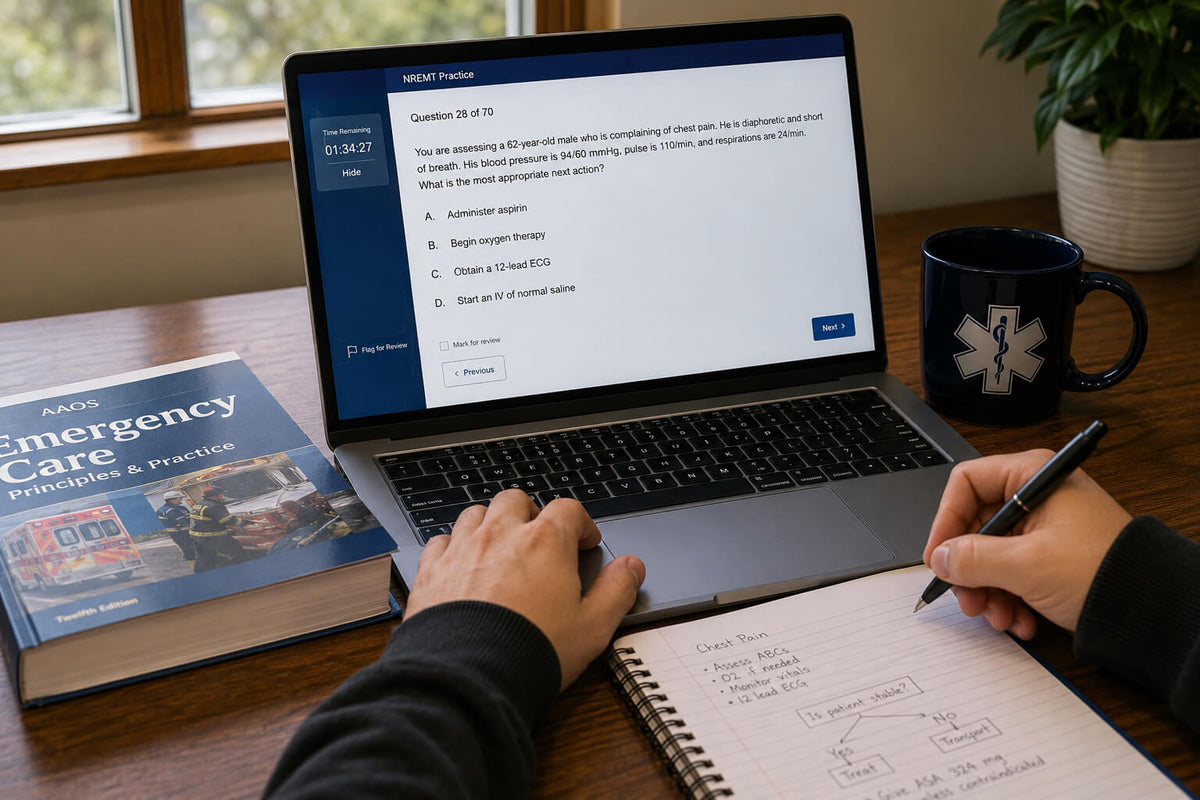
The NREMT cognitive exam is a computer-adaptive test designed to evaluate how well you apply EMT knowledge and clinical judgment in different situations.
The updated exam focuses on:
- Scene Size-Up and Safety
- Primary Assessment
- Secondary Assessment
- Patient Treatment and Transport
- Operations
Pediatric care is integrated throughout these domains rather than treated as a separate section.
Strong NREMT test prep in Kentucky should focus on understanding scenarios, applying clinical reasoning, and improving your test-taking strategy, not simply memorizing answers.
Step 04
Pass the NREMT Cognitive Exam
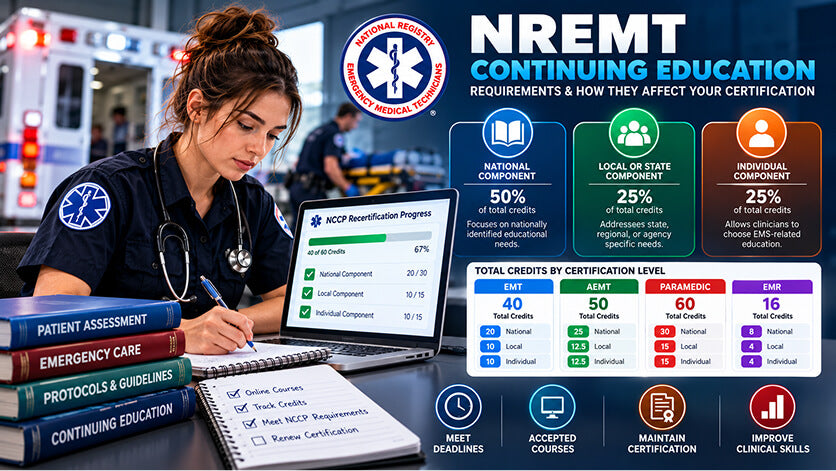
After completing your training, take the NREMT cognitive exam. The exam uses a computer-adaptive format, so the difficulty of questions changes based on your performance. How To NREMT helps candidates prepare with realistic practice exams, performance feedback, and structured study tools designed around the current NREMT format.
If you are looking for NREMT exam prep in Kentucky, focused practice can help you identify weak areas before test day.
Step 05

Complete Kentucky's Skills Requirement
Unlike the National Registry, which no longer requires the psychomotor exam for national certification, Kentucky's state process includes a skills requirement.
Your EMT training program may coordinate the hands-on skills evaluation as part of your training. Make sure you understand your program's current requirements and complete the required skills assessment.
Step 06
Gather Your Certification Documents
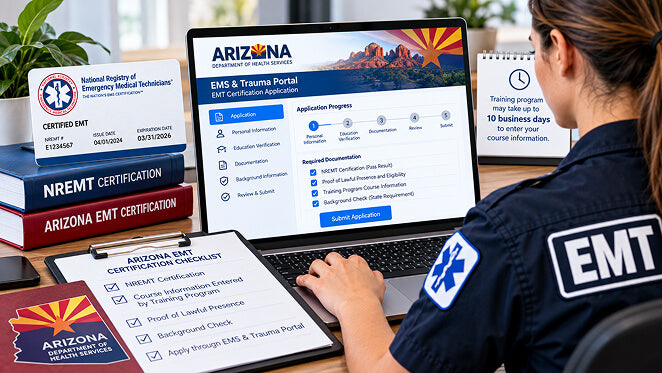
Before applying for your Kentucky EMT license, organize the documents you may need, including:
- Proof of approved EMT course completion
- NREMT cognitive exam results
- Current CPR certification
- Required background check information
- Identification and other state-required documents
Having your records ready can make the application process easier and help prevent unnecessary delays.
Step 07
Apply for Kentucky EMT Certification
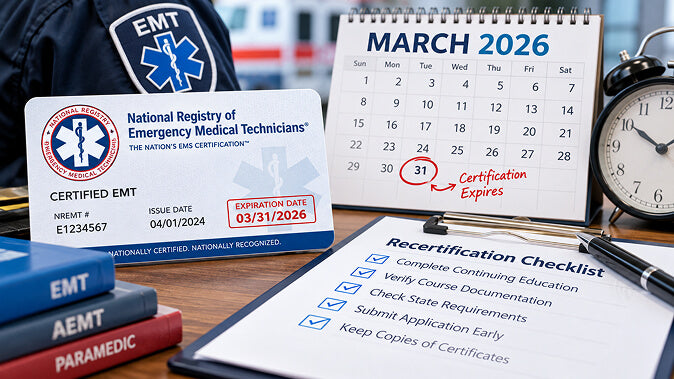
After completing your training, exam, and required skills assessment, submit your application through the Kentucky EMS certification system. Follow the current instructions, upload the required documents, pay the applicable fee, and wait for your application to be reviewed.
Once approved, you can move forward with your EMT certification in Kentucky and begin pursuing EMT opportunities in the state.
Kentucky vs. National EMT Certification
National certification through the NREMT and state certification through Kentucky are related but not identical. Here's a simple comparison:
| Requirement | NREMT | Kentucky |
|---|---|---|
| NREMT Cognitive Exam | Required | Required |
| Psychomotor Exam | Not required nationally | State-required |
| CPR Certification | Required | Required |
| State Application | Not applicable | Required |
| State Certification | National credential | Required for Kentucky practice |
Note: The National Registry has discontinued its psychomotor examination requirement, while Kentucky maintains its own state skills requirement.

Prepare for the NREMT Exam with How To NREMT
Passing the NREMT is about more than studying notes. You need to understand how questions are structured, apply EMT concepts to scenarios, and recognize where your knowledge needs improvement.
How To NREMT provides tools to support both first-time test takers and retakers, including:
- 2,000+ NREMT practice questions for realistic exam preparation
- AI-powered EMT tutoring to explain difficult topics and answer questions
- 10-step training system to give your preparation a clear structure
- Practice exams and performance feedback to help identify weak areas
- 7- or 14-day NREMT Bootcamp with focused study sessions, live coaching, and practice exams
Whether you are searching for EMT classes in Kentucky or already completing your training, these resources can help you prepare for the next stage of your EMT journey.
FAQs
Does Kentucky require both the NREMT exam and a skills exam?
Yes. Kentucky requires candidates to pass the NREMT cognitive exam and complete the state's required hands-on skills assessment.
How do I apply for EMT certification in Kentucky?
After completing your approved EMT training and required exams, you can submit your certification application through Kentucky's EMS certification system with the required documents and fees.
What is the NREMT exam like for Kentucky EMT students?
The NREMT cognitive exam is computer-adaptive and focuses on areas such as scene size-up, patient assessment, treatment and transport, and EMS operations. Pediatric care is integrated throughout these domains.
Can I prepare for the NREMT exam online in Kentucky?
Yes. Online practice questions, simulated exams, AI tutoring, and structured study plans can help Kentucky EMT candidates prepare before test day.
What if I fail the NREMT exam on my first attempt?
A failed attempt does not mean you need to start over. Review your performance, identify your weaker areas, and adjust your study strategy before taking the exam again.

- Choosing a selection results in a full page refresh.